
Mysteries of Rosemary
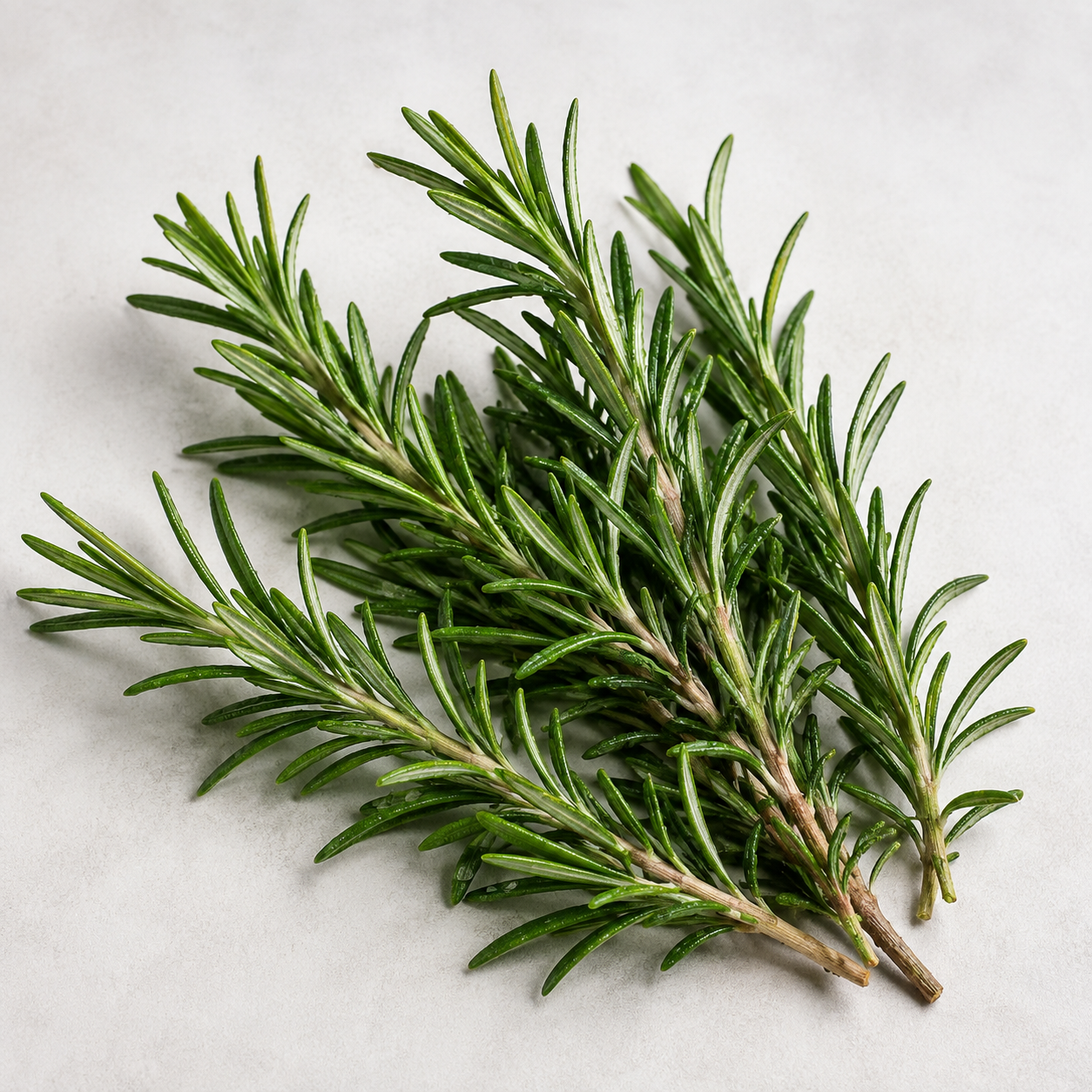
Rosemary has been valued around the Mediterranean for thousands of years, especially among the ancient Greeks and Romans, who associated it with memory, purification, and wellbeing. It was used in religious ceremonies, funerary customs, bathing, cooking, and traditional preparations for the hair and skin. During the Middle Ages, rosemary remained an important household and monastic herb across Europe, where it was infused into oils, waters, wines, and aromatic preparations. Over centuries, it became one of the most enduring herbs in European folk tradition, valued as much for its fragrance and symbolism as for its practical uses.
Mysteries of Rosemary
The Night Rosemary Was Asked to Hold Back Time
Imagine walking into a high-end department store today, approaching the cosmetics counter, and asking for a serum so potent that you only need to splash it on your cheeks once every 365 days. The aesthetician would politely smile, check whether security was nearby, and hand you a four-step daily regimen costing as much as a used hatchback.
Yet on the evening of June 23, in rural villages across Spain, that was precisely the arrangement people struck with nature.
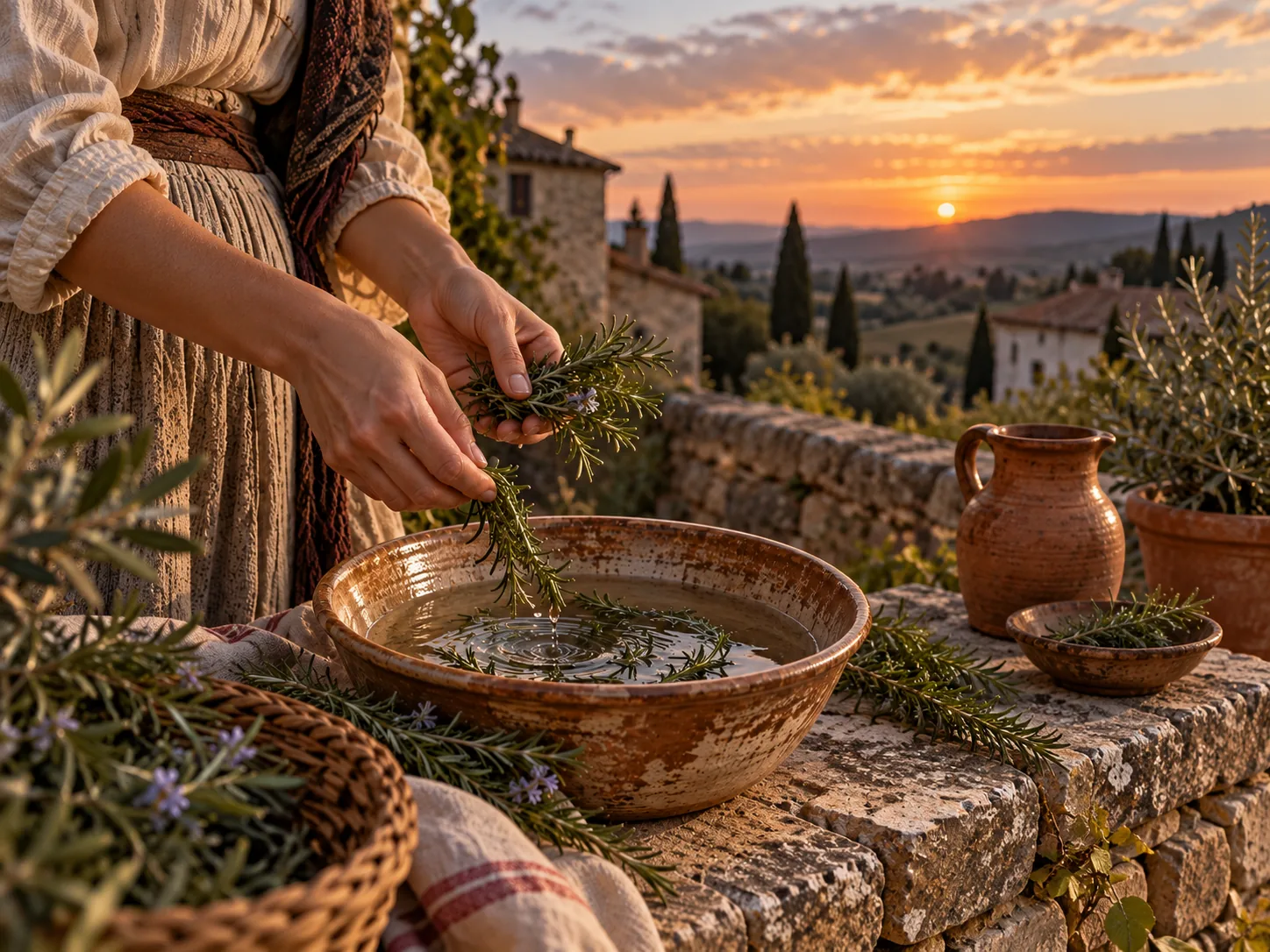
Women walked out into fields and hillsides, gathered freshly aromatic plants including rosemary, dropped them into a vessel of water, and set the bowl outside. They did not bring it inside when darkness fell. They left it deliberately under the open sky to sit in the damp, cooling darkness. When dawn broke on June 24, they washed their faces with the infused water. According to tradition documented in Spain's national inventory of traditional biodiversity knowledge, the purpose was breathtaking in its ambition: to preserve freshness, vitality, and keep the complexion young for an entire year.
In Spanish ethnobotanical records, the practice is noted in places separated by hundreds of kilometers, from Monfragüe in Extremadura to Galicia in the misty northwest. The phrasing is wonderfully understated: rosemary was gathered and macerated during the night of San Juan, al sereno, to mantener el cutis joven durante todo el año.
At first blush, this reads like pure midsummer romance. A poetic ritual of dew, bonfires, and hope. But when you strip away the poetry, you run face-first into an empirical chemistry experiment that deserves a serious look.
What happens to rosemary when it spends eight hours steeping in cold water under the stars? And could something scientifically tangible have been hiding in plain sight behind a ritual mask?
To understand what was happening in that bowl, you first have to unlearn the slick modern version of the story. It would be convenient to package this as single-ingredient rosemary water. Modern beauty marketing loves a solitary hero ingredient. But traditional botanical life was rarely a solo act.
In Galicia, the custom is part of the herbas de San Xoán, the herbs of Saint John. The local ritual often called for water drawn from seven separate springs, combined with a mixture of distinct plants. Rosemary, known locally as romeu, shared bowl space with wild fennel, mallow, lemon verbena, ferns, broom, and Saint John's wort. Every valley, and often every family grandmother, had their own variation on the formula. In Cerdedo, villagers preserved an oral memory of soaking these botanicals overnight to protect against misfortune and retain louzanía, an untranslatable Galician word conveying dewy freshness, bounce, and vigor in the skin.
Farther south in Extremadura, folklorist José María Domínguez Moreno recorded identical customs. In villages like Torremenga, family washbasins were filled on midsummer night with roses, jasmine, carnations, honeysuckle, and rosemary, ready for the dawn wash.
The geographic divide is striking. Galicia is rugged, damp, and Atlantic-facing, steeped in Celtic and Iberian lore. Extremadura is sun-baked, continental, and rocky. Yet both arrived at the same operational formula: a specific date, cold soaking in the night air, and dawn application to the skin.
Ethnobotanist Álvaro Tejerina Gallardo spent seven years conducting nearly 600 interviews to preserve these oral traditions in Monfragüe before the elders who remembered them were gone. When his work was published in 2010, followed by Juan Antonio Latorre Catalá's ethnobotanical studies in A Coruña, it gave formal academic preservation to practices whose beginnings are lost to time. We cannot pretend to know whether this started in the nineteenth century, the Middle Ages, or classical antiquity. We only know that generation after generation handed down the bowl.
There is also the matter of what al sereno really means.
Modern wellness culture loves nothing more than the idea of water charged under moonlight. But the Spanish phrase al sereno is far more grounded. It refers quite simply to being exposed to the open night air and the damp, cool humidity that settles before morning. In Galician, it is described as ao orballo, under the falling dew.
There is no mention in the ethnobotanical texts of waiting for planetary alignments or moonbeams to strike the foliage. What mattered was the cool temperature, the hours of extraction, and the moisture. It was an unheated, extended cold maceration carried out in an open environment.
And why rosemary?
Rosemary was already an anchor of household survival in the Iberian Peninsula. It was burned for indoor air clearance, massaged into aching joints, applied to wounds, rubbed into thinning scalps, and tucked into doorway lintels for luck. But did cold water do anything to the needle-like leaves, or were villagers simply splashing themselves with scented ice water?
Here is where modern laboratory chemistry crashes the party.
Rosemary is an intricate biofactory. It contains polyphenols like rosmarinic acid, diterpenes such as carnosic acid and carnosol, flavonoids, and a cloud of aromatic volatile compounds.
In typical modern usage, we turn to heat or alcohol. When scientists brew a traditional hot infusion of rosemary tea, hot water extracts dozens of individual compounds, with rosmarinic acid dominating the solution. If you want carnosic acid, however, you generally need non-polar solvents like alcohol or specialized carrier oils because carnosic acid does not dissolve well in plain water.
Yet when researchers subjected rosemary leaves to prolonged cold-water maceration at ambient room temperatures, they uncovered something fascinating: water alone, without an ounce of steam or heat, slowly drew out substantial quantities of phenolic compounds over several hours.
Cold rosemary water is not chemically plain water. It is an unheated aqueous polyphenol extract.
By deliberately leaving the herbs to macerate through the cool night, the women were running a gentle extraction. Heat degrades delicate plant compounds and vaporizes light essential oils. The cool outdoor air acted as a natural temperature buffer, keeping the macerate cold while slowly coaxing water-soluble antioxidants like rosmarinic acid out of the plant tissue.
Now, does modern science validate the idea that this water keeps a face young for a year?
Let us be completely honest: no. Splashing your face once at dawn on June 24 will not stop collagen breakdown while you spend July and August baking under the Spanish sun. Biology simply does not operate on an annual reset button.
However, the cellular science around these specific molecules has recently turned heads in dermatology.
In 2013, researchers looking at carnosic acid demonstrated that it suppressed ultraviolet-induced matrix metalloproteinases in human fibroblasts. Those enzymes are the very biological hammers that break down the extracellular matrix and drive photoaging when sunlight hits your face.
In 2024, laboratory experiments showed that rosmarinic acid and rosemary extracts encouraged human dermal fibroblasts to express structural components essential for elastic-fiber formation. In plain English: it signaled cells to rebuild the scaffolding that keeps tissue supple.
Then, in 2026, researchers tested an unheated aqueous extract of rosemary directly on human dermal fibroblasts and 3D skin models. Unlike studies using concentrated oils, this research looked at what rosemary leaves release into ordinary water. The team observed protective effects against ultraviolet damage, inflammatory signaling, and markers of collagen loss.
None of these petri dish studies prove that an overnight folk recipe erased wrinkles. Most dermatological reviews emphasize that large-scale human clinical trials are still missing. But they show that the botanical chemistry extracted by water directly targets the primary pathways of skin aging and environmental stress.
Before you gather twigs from the garden and set a cereal bowl on your patio tonight, there is a very practical warning you should heed. Leaving water and raw organic leaves outdoors overnight creates a welcoming breeding ground for airborne microbes and bacteria.
As modern health agencies like the FDA point out, water-based cosmetic formulations require strict sanitation, water purity standards, and microbiological preservation to prevent dangerous microbial growth. Splashing unpreserved garden swamp water over your eyes and broken skin barriers in the name of antiquity is an excellent way to earn a trip to an urgent care clinic. The brilliance of traditional knowledge lies in its conceptual insight into extraction, not in its adherence to modern sterile practices.
The real magic of the Saint John's Night water does not lie in supernatural dew or planetary alignment. It lies in human attentiveness.
Centuries ago, long before the invention of spectrophotometers, cellular assays, or peer-reviewed journals, observant people paid attention to their surroundings. They knew that life in the village was physically demanding, sun-bleached, and taxing on the body. They could feel the dry sting of early summer weather on their skin.
They did not have the vocabulary of extracellular matrix integrity, free-radical scavengers, or cellular oxidation. But they had patience, sensory intelligence, and an instinct for stewardship. They paired the physical act of plant extraction with a cultural moment of renewal. They looked at a resilient aromatic shrub thriving on dry limestone hills, noticed how water could carry its essence, and asked the plant to offer its vigor to their own weathered skin.
The claim of annual youth was an exaggeration of hope. But beneath the folklore lived an astute observation: nature holds molecules capable of renewal, and a quiet, patient night of cold water is sometimes all it takes to draw them into the light.